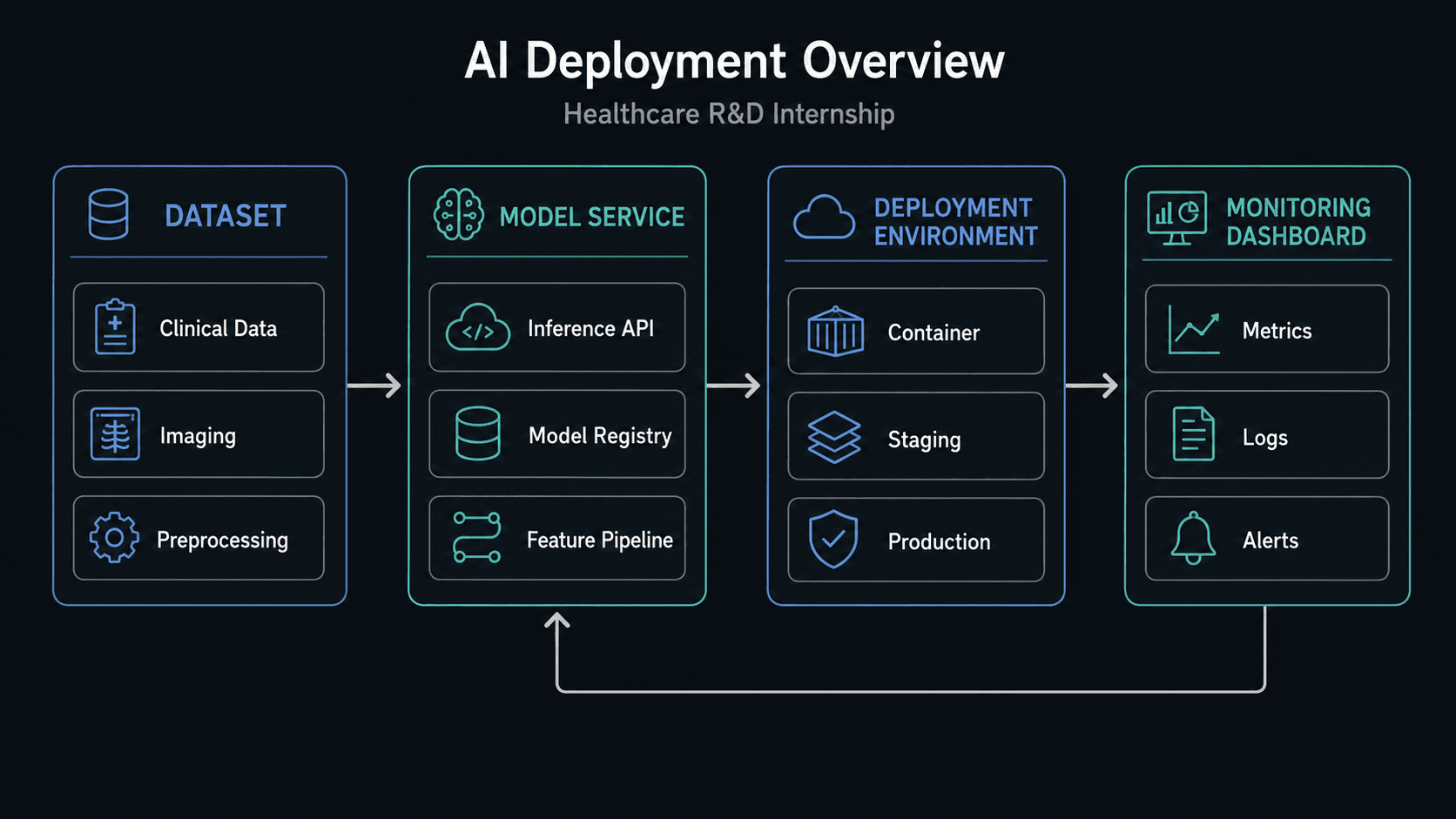
Healthcare-adjacent R&D, real data, senior engineers.
OKTAN is a Turkish health R&D company building smart systems. I joined the AI team as an intern and was given the kind of access that interns rarely get: real datasets, real deployment paths, the engineers willing to explain the why. My job was to deploy AI applications and observe how they behaved once they left the notebook.
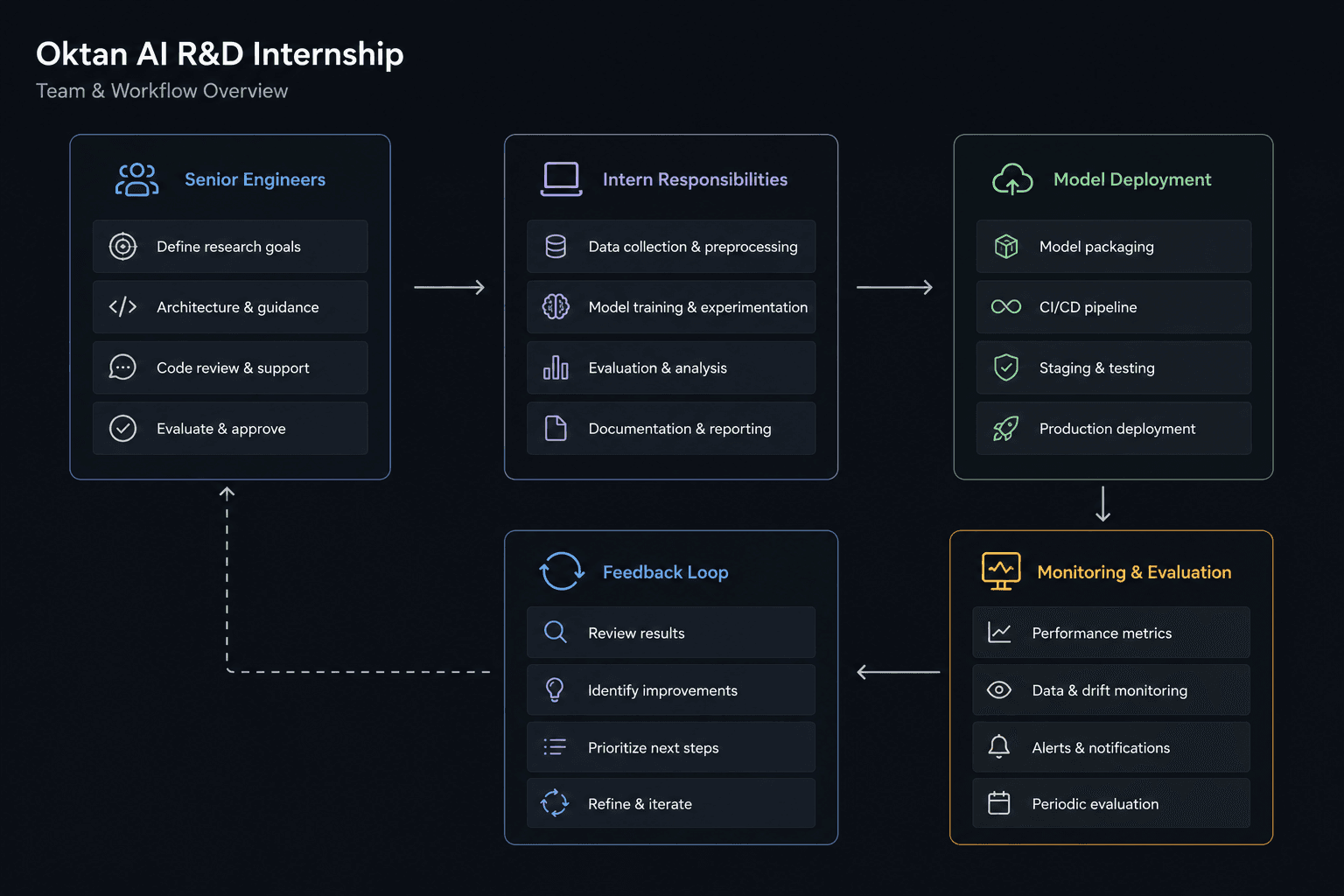
Deployed models, tuned them, and learned the boring parts.
The work itself was unglamorous and exactly right for the moment. I deployed AI models and supporting services, tuned them against real-world data, and contributed to feature work alongside senior engineers — the parts of ML nobody puts in tutorials.
“The work itself was unglamorous and exactly right for the moment.”
- Deployed AI models and supporting services into production-adjacent environments.
- Tuned models against real, messy data — the kind notebooks never show.
- Learned from the internal smart-systems platform — observability, monitoring, deployment paths.
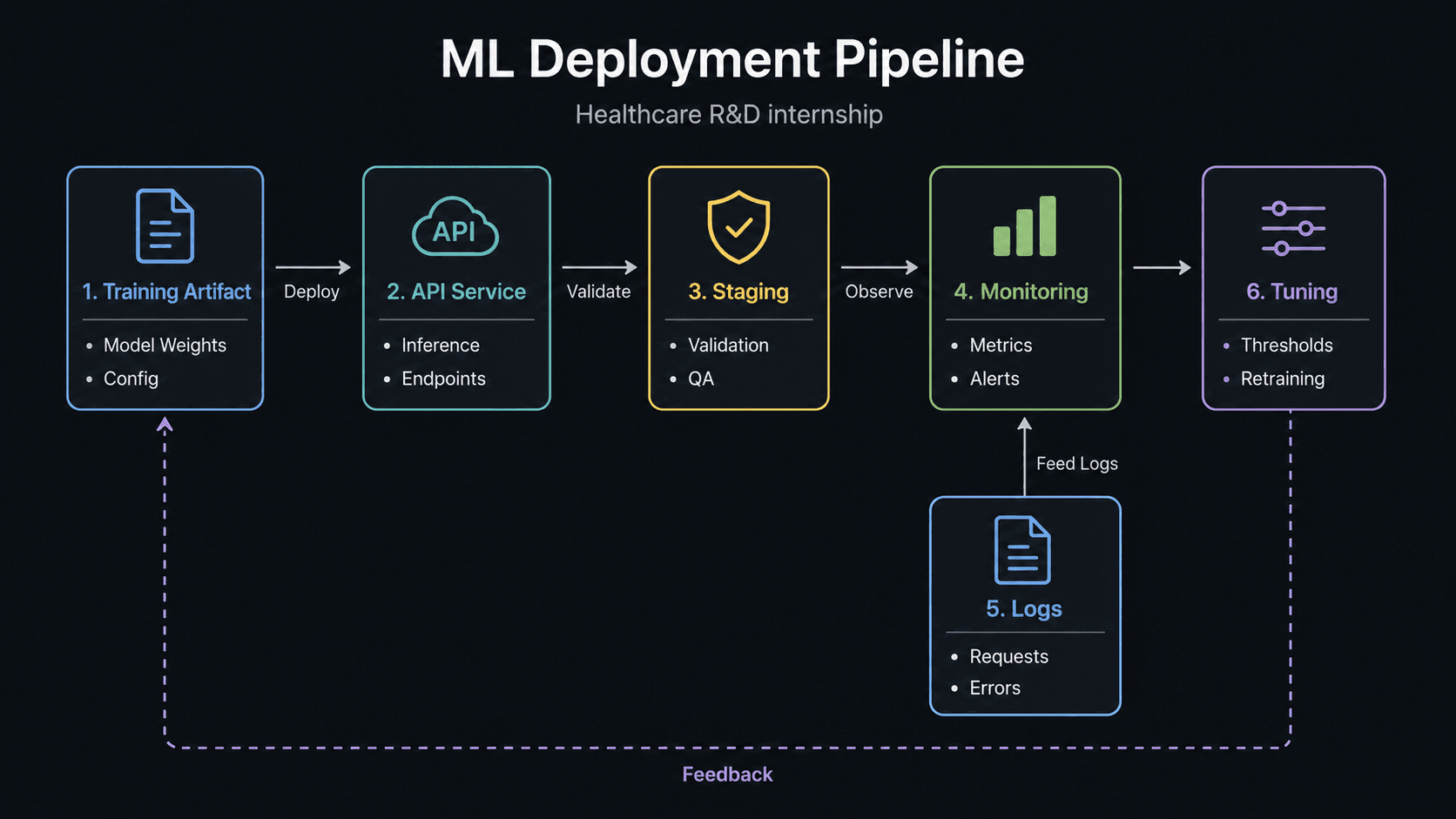
Production is the design constraint. Not an afterthought.
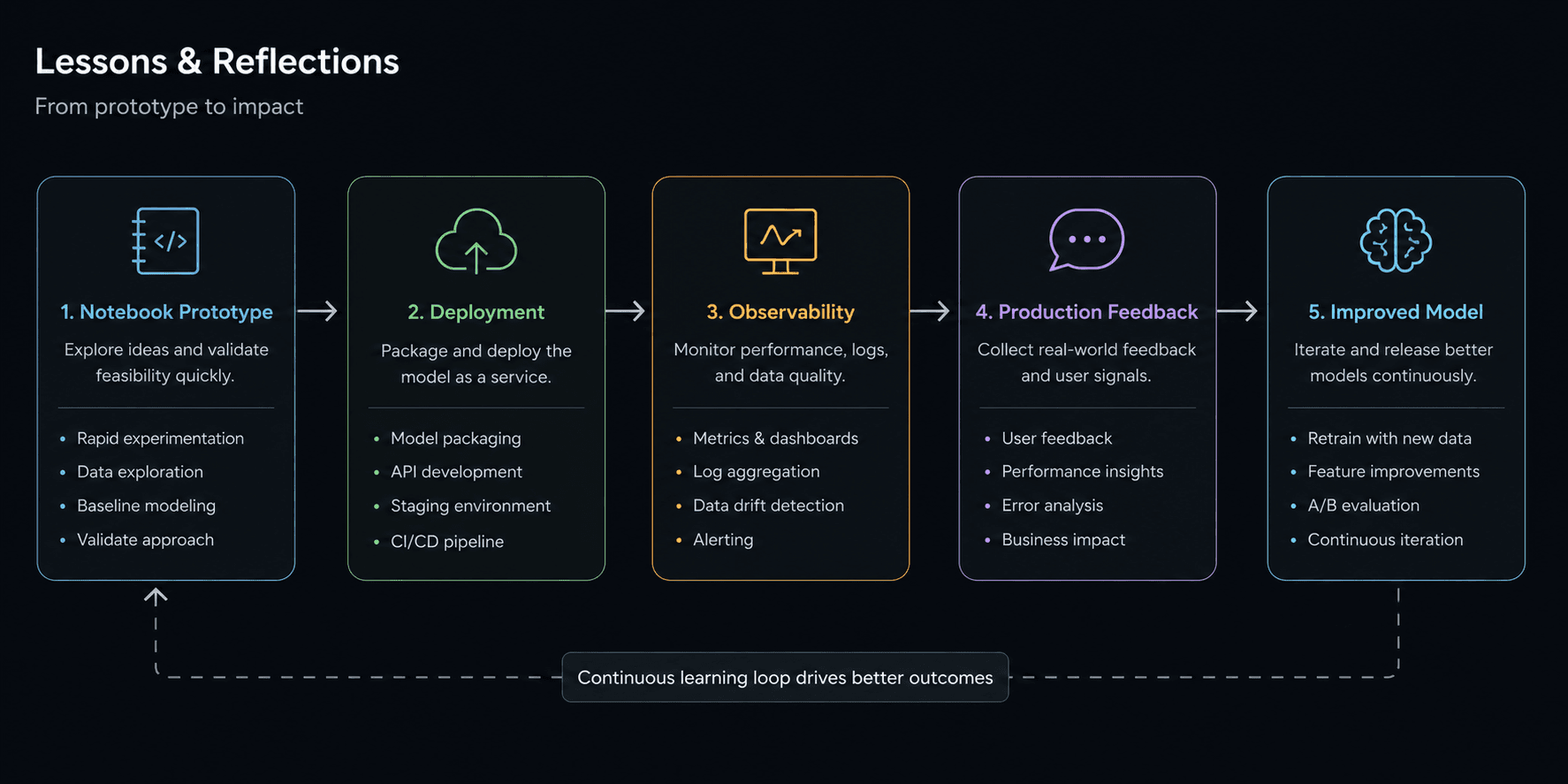
OKTAN reframed how I build. A model that only works in a notebook isn't a product. Every project I've shipped since — Let's Note AI, Tummie, Moonshot, NanoShield — assumes deployment, observability, and a feedback loop from day one. That's the actual lesson of this internship.
built by one person · case study written by the same person